09
2026.11
How Tool Holder Runout Affects CNC Machining Accuracy
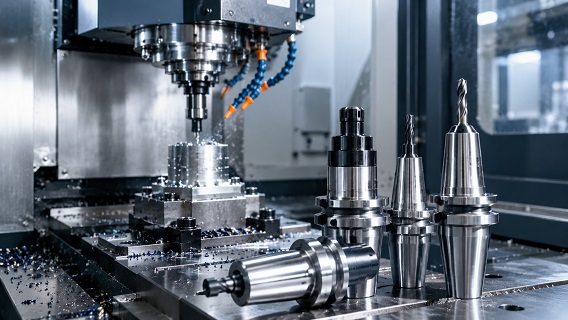
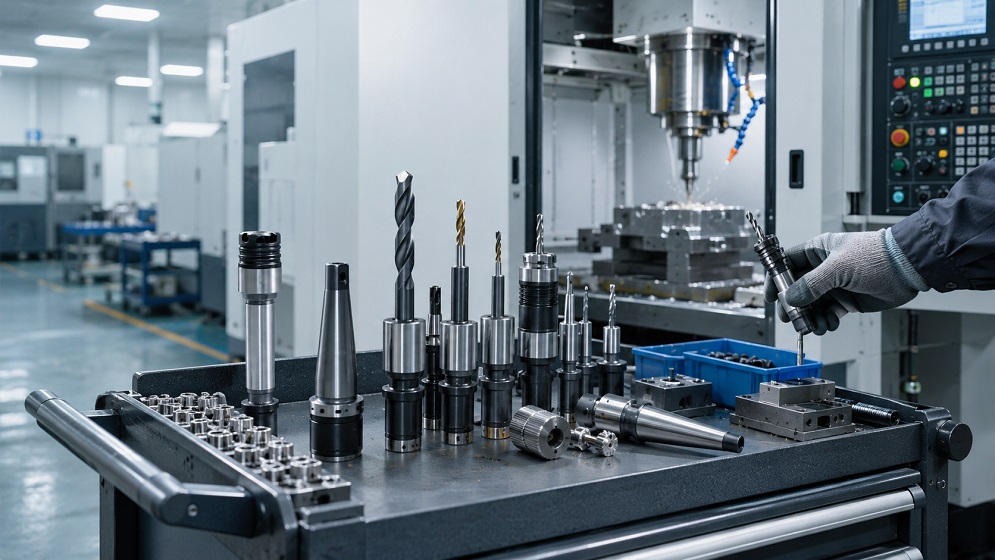
In CNC machining, tool holder runout is an important factor affecting machining accuracy and surface quality. Even small deviations can cause uneven cutting, increased tool wear, and poor machining results. Understanding tool holder runout can help manufacturers choose better tooling solutions and improve machining efficiency. What Is Tool Holder Runout? Tool holder runout refers to the deviation of a cutting tool from its ideal centerline during rotation. Ideally, the cutting tool should rotate concentrically with the spindle. Excessive runout may result from manufacturing errors, improper clamping, or contamination on contact surfaces. Runout is usually measured in microns (μm). A smaller value generally indicates better rotational accuracy. How Does Runout Affect Machining? Excessive tool holder runout can negatively affect CNC machining in several ways: Poor Surface Finish: Uneven cutting forces may cause visible machining marks. Increased Tool Wear: Uneven cutting loads can accelerate cutting edge wear. Reduced Accuracy: Runout may lead to dimensional deviations and inconsistent machining results. Machining Vibration: Unbalanced cutting forces may contribute to vibration and unstable machining conditions. What Causes Tool Holder Runout? Several factors can contribute to excessive tool holder runout: Poor manufacturing accuracy. Improper tool clamping. Dirt or chips on contact surfaces. Worn collets or tool......
Read More
24
2026.10
T-slot rubber covers for milling machines
T-slot rubber covers (often called chip guards or slot sealing strips) are flexible extrusions made of high-temperature silicone rubber designed to prevent metal chips, swarf, and coolant from filling the T-slots of a milling machine table.Using them dramatically cuts down on cleanup time, improves operator safety, and prevents grime buildup in the table grooves. Edge Technology& more • Fit & Sizing: Highly versatile sizing spanning from 9/16″ (14mm) up to 1-1/2″ (38mm) width openings. • Material Properties: Durable, washable, and flexible high-temperature silicone. • Coverage: Available to purchase in bulk lengths including 10 ft, 20 ft, 30 ft, 50 ft, and 100 ft rolls. Installation Tips Installation Method: Users can easily cut the rubber to length using a standard utility knife or PVC pipe cutter. When pressing it into place, applying a light coat of lightweight oil or rust preventative makes the flexible legs slide straight down into the slot chamfer much easier.
Read More
01
2026.08
Why Tool Holder Balance Matters in High-Speed Machining
In high-speed machining, many factors affect cutting performance: spindle speed, cutting parameters, tool quality, and machine rigidity. But one factor that is often underestimated is tool holder balance. At higher RPM, even a small imbalance in the tool holder can create significant vibration, affecting surface finish, tool life, and overall machining stability. A balanced tool holder rotates more smoothly. This reduces vibration during cutting and helps the machine maintain stable performance at high spindle speeds. In mold machining, precision milling, and high-speed finishing, this can make a clear difference in machining quality. When a tool holder is not balanced properly, several problems may appear. The first is vibration. At low speed, the effect may be small. But at high RPM, imbalance becomes much more noticeable. This vibration can damage the surface finish, reduce dimensional accuracy, and increase spindle load. The second problem is shorter tool life. Vibration increases the load on the cutting edge and creates unstable contact between the tool and the workpiece. This causes faster wear and may even lead to premature tool breakage, especially with small-diameter tools used in mold and precision work. Another issue is reduced spindle protection. Unbalanced rotation transfers more force into the spindle......
Read More
01
2026.08
How Quality Inspection Improves CNC Tool Holder Reliability
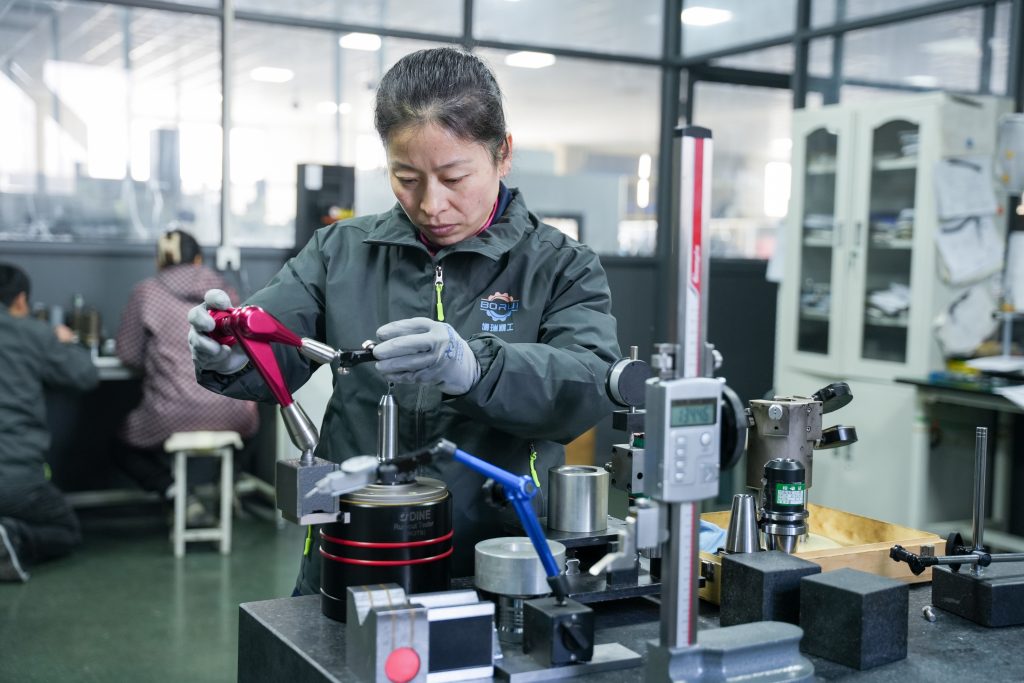
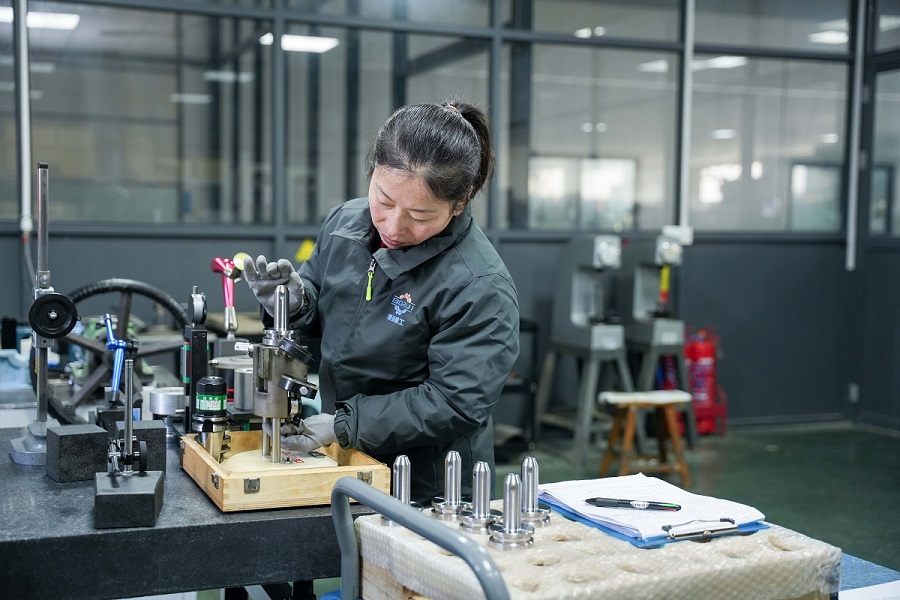
In CNC tool holder manufacturing, good machining alone is not enough. A tool holder may look well-finished on the outside, but its real value depends on internal accuracy, clamping consistency, taper fit, and assembly quality. This is why quality inspection is one of the most important parts of reliable tool holder production. A tool holder sits between the machine and the cutting tool. If its accuracy is unstable, the entire machining process can be affected. Problems such as poor taper fit, clamping bore deviation, excessive runout, or weak assembly accuracy in driven holders can lead to vibration, poor surface finish, reduced tool life, and unstable production. One of the first inspection points is taper accuracy. The taper must match the spindle correctly to ensure stable mounting and proper contact. If the taper is not accurate, the holder may not seat properly in the spindle, which can create vibration and reduce machining precision. Another key point is clamping bore accuracy. In hydraulic holders, shrink fit holders, collet holders, and power chucks, the clamping section must be machined precisely. Even small errors can affect tool grip, runout, and cutting stability. Runout inspection is especially important for precision machining applications. A holder with......

Read More
01
2026.08
Angle Heads in CNC Machining: When and Why to Use Them
In CNC machining, not every feature can be reached easily from the machine spindle’s standard direction. Some workpieces require side drilling, side milling, or machining on surfaces that are difficult to access directly. In these situations, angle heads are a practical solution. An angle head is a spindle attachment that changes the direction of the cutting tool. Instead of cutting only in the spindle’s main axis direction, the machine can perform machining operations at 90 degrees or another angle, depending on the design of the angle head. This allows one machine to handle more machining tasks without moving the part to a second setup. Angle heads are especially useful when the workpiece has: side holes cross holes side milling surfaces deep or limited-access features multi-face machining requirements One of the main reasons to use an angle head is to reduce secondary setups. Without an angle head, the workpiece may need to be reclamped or rotated to reach a certain feature. This takes time and can reduce positioning accuracy. With the right angle head, the same feature can often be machined in the original setup. Angle heads are commonly used in: mold and die machining automotive components large housings and plates......
Read More
01
2026.08
How Custom Tool Holder Solutions Help Solve Non-Standard Machining Tasks
Standard tool holders are suitable for many machining tasks, but real production often includes applications that go beyond standard catalog products. Deep-hole drilling, high-speed mold machining, special machine interfaces, and limited tool access can all create situations where standard holders are no longer the best choice. This is where custom tool holder solutions become important. A custom tool holder is not simply a holder with a different length. It is a solution developed around a specific machining challenge. The goal is to improve stability, fit the machine or workpiece more accurately, and help the customer solve a problem that standard products cannot handle efficiently. One common example is deep-hole machining. Standard holders may be too short or may not provide enough rigidity for long-overhang cutting. In these cases, a custom holder can be designed with a longer body, reinforced structure, or anti-vibration improvement to support deeper machining while reducing chatter. Another common application is special machine interface matching. Some turning centers or machining systems use specific VDI, BMT, or spindle-related tooling configurations that standard holders do not fully match. Custom holders allow the output interface, body structure, or mounting section to be adjusted for the exact machine setup. High-speed precision......
Read More